
Customer Support
(814) 646-3920
(814) 646-3920

Here's a question that's sparked friendly debates at quilting bees for decades: cotton or polyester thread? If you've ever stood in front of a wall of thread spools wondering which one deserves a spot in your sewing room, you're not alone. It's one of the most common questions we hear from quilters of all skill levels.
The truth is, there's no single "right" answer: but there is a right answer for your project. And once you understand how each thread performs, you'll feel confident reaching for exactly what you need every single time.
Today, we're breaking down the differences between cotton and polyester thread, with a special focus on two of our trusted favorites: Signature Cotton and Affinity Polyester. Whether you're piecing your first sampler quilt or loading a customer quilt onto a longarm, this guide will help you make the best choice for beautiful, lasting results.
It's easy to think of thread as an afterthought: just grab whatever's on sale and start stitching, right? But thread is the backbone of every seam you sew. It holds your piecing together, creates texture in your quilting designs, and determines how your finished project will look and feel for years to come.
The wrong thread can lead to:
The right thread? It disappears into your work (or makes a beautiful statement), holds strong through countless washes, and keeps your machine humming along happily.
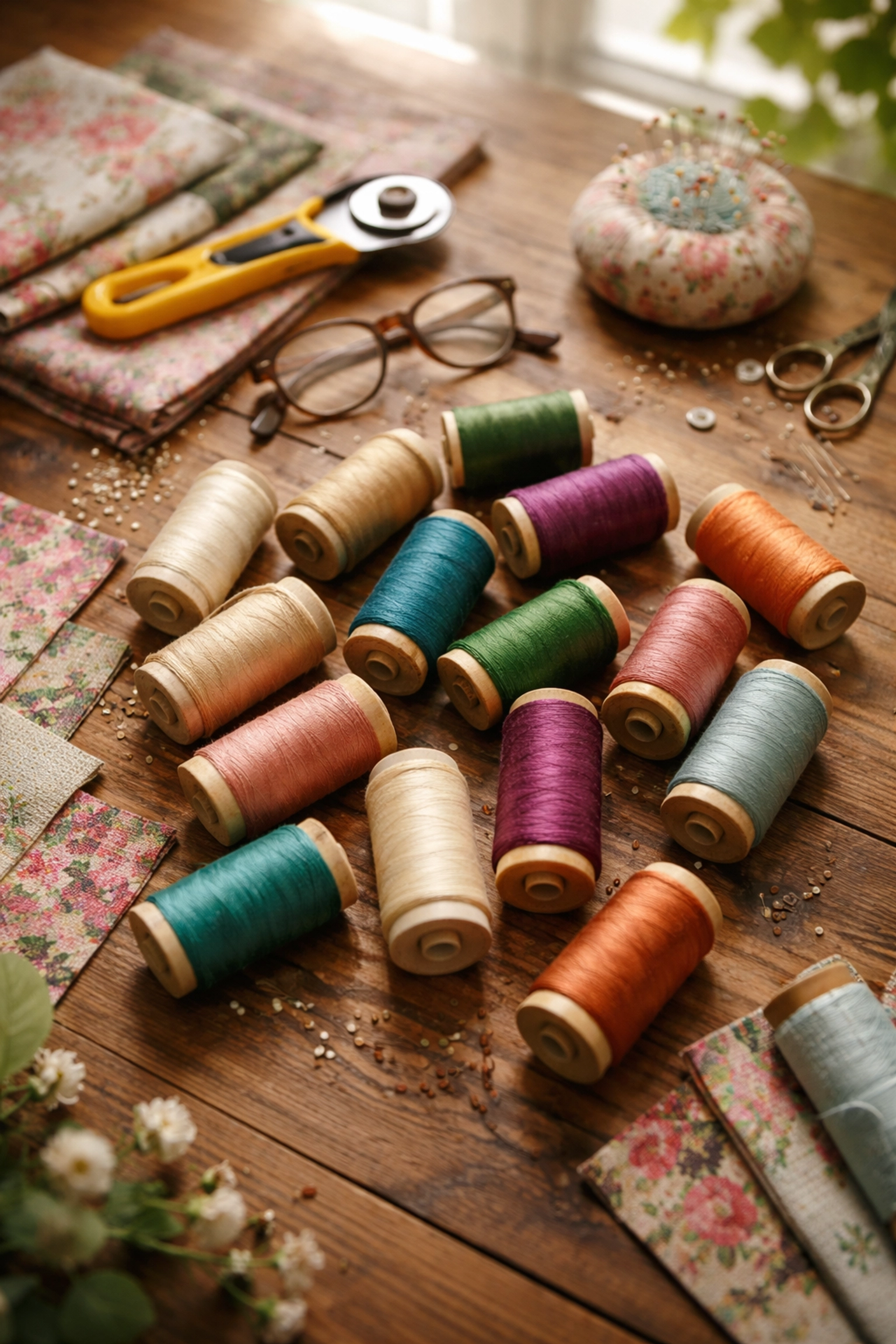
Cotton thread has been the quilter's go-to for generations, and for good reason. If you love that soft, traditional look where your stitches seem to melt into the fabric, cotton is your friend.
Matte finish: Cotton thread has a beautiful non-reflective surface that blends seamlessly with quilting cotton fabrics. Your stitches become part of the fabric itself rather than sitting on top of it.
Minimal stretch: Unlike some synthetic threads, cotton doesn't have much give. This means your seams stay put after washing: no surprise puckering or distortion.
Heat resistant: Cotton handles the heat of your iron without worry, which matters when you're pressing dozens of seams.
Natural fiber harmony: When you're working with 100% cotton fabric (which most quilters are), using cotton thread creates a cohesive feel throughout your project.
At Countryside Quilts™, we carry Signature Cotton thread because it consistently delivers on quality. It's long-staple Egyptian cotton, which means fewer joins in the thread and less lint in your machine. Available in a gorgeous range of colors, it's perfect for piecing and gives that classic quilted look that never goes out of style.
Cotton thread will shrink slightly (around 3% for quality thread), which can actually work in your favor: it helps your quilting stitches sink into the batting for that lovely textured effect. However, cotton does produce more lint than polyester, so you'll want to clean your machine regularly.
If cotton is the gentle traditionalist, polyester is the adaptable overachiever. Modern polyester thread has come a long way from the stiff, shiny stuff your grandmother might have warned you about. Today's polyester is strong, smooth, and remarkably versatile.
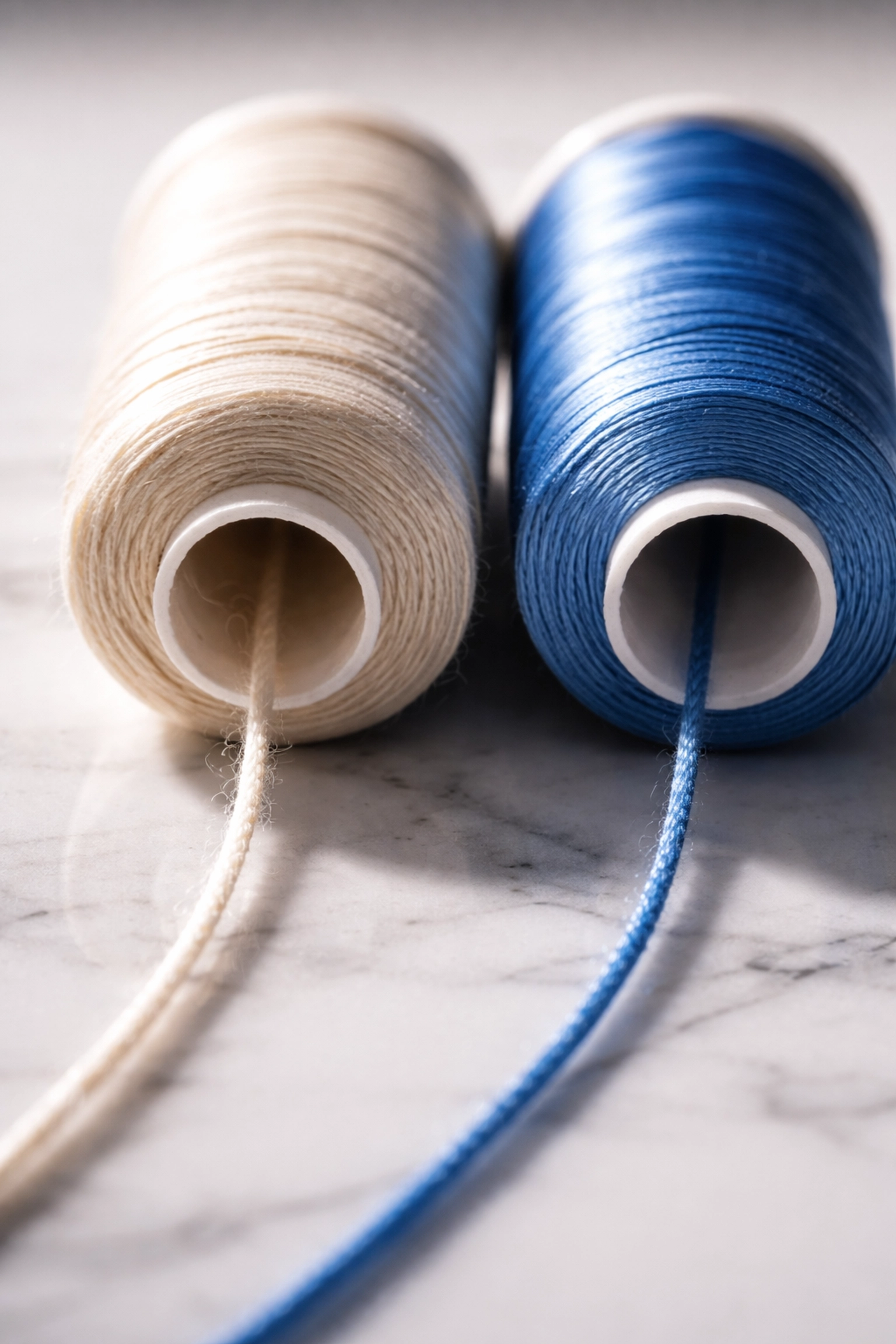
Superior strength: Polyester is significantly stronger than cotton, even in finer weights. This makes it ideal for quilting where your stitches need to hold up over time.
No shrinking: Polyester maintains its size through washing, which can be important for certain projects.
Colorfastness: Those vibrant colors won't fade, even after many trips through the washer.
Less lint: Polyester produces less fuzz, which means fewer stops to clean your machine: especially appreciated during marathon quilting sessions.
Available in fine weights: Because polyester is so strong, manufacturers can spin it much finer while maintaining durability. This is a game-changer for machine quilting where you want your stitches to be nearly invisible.
Not all polyester thread looks the same:
Cottonized polyester goes through a treatment that removes stretch and reduces shine. The result? A matte appearance similar to cotton with all the strength benefits of polyester. It's the best of both worlds for many quilters.
Trilobal polyester has a triangular shape that reflects light beautifully. If you want your quilting stitches to sparkle and stand out, this is your thread.
Affinity Polyester has earned its place in our sewing room. It's a cottonized polyester, which means you get that soft, matte look without sacrificing strength or creating excess lint. It glides through your machine like butter, works beautifully for both piecing and quilting, and comes in an extensive color palette.
For longarm quilters especially, Affinity has become a staple. It handles high-speed stitching without breaking, doesn't leave lint buildup in your machine, and creates consistent, beautiful results stitch after stitch.
So how do you decide? Here's our friendly advice based on years of testing in our own sewing rooms:
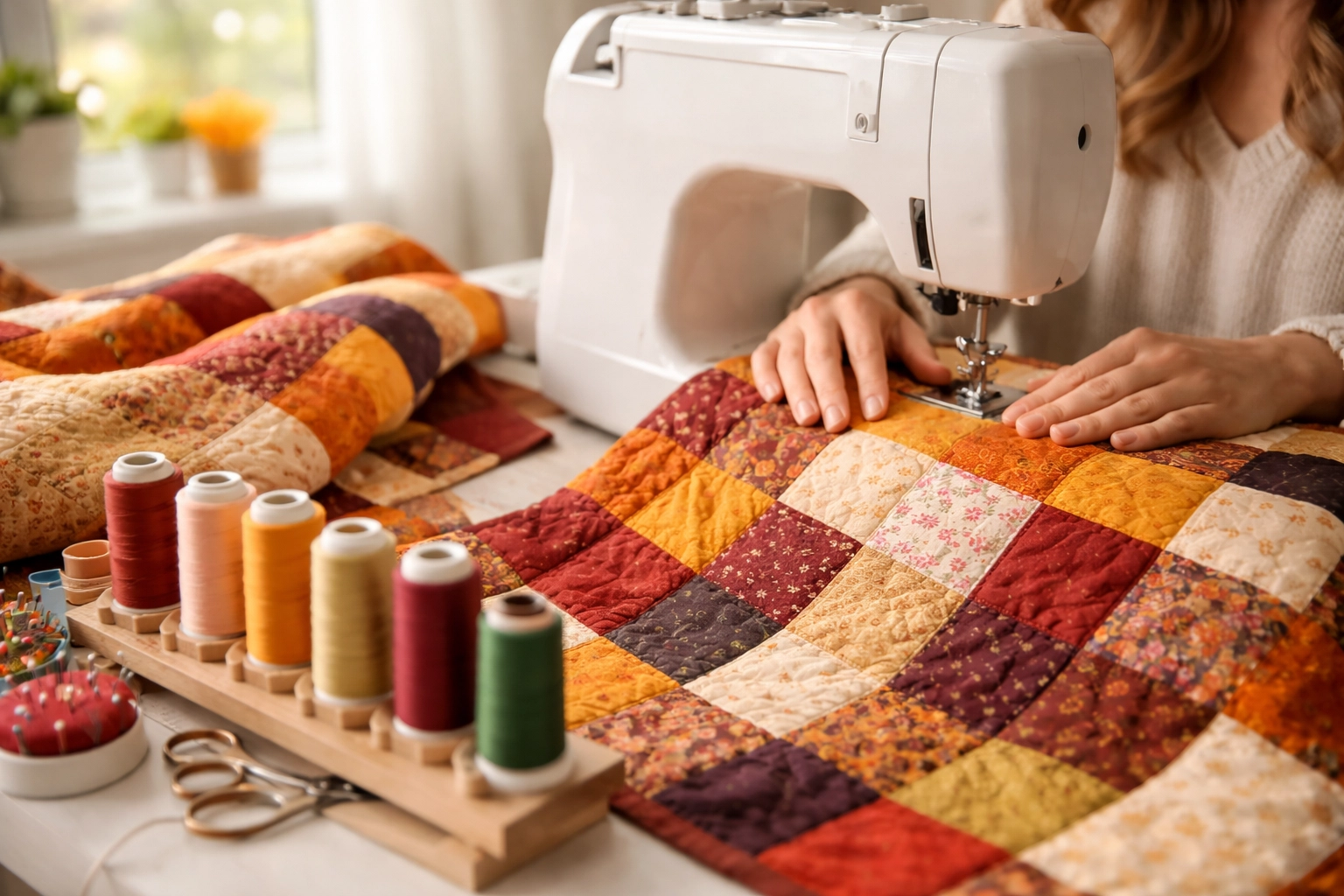
Piecing vs. Quilting: Many quilters use cotton for piecing and polyester for the actual quilting. This gives you the traditional pieced look with durable quilting stitches that can handle the stress of a finished quilt.
Thread Weight: For invisible quilting stitches, a fine polyester (like 50 or 60 weight) often works better than cotton because it maintains strength at smaller diameters.
Color Matching: Sometimes the perfect color only exists in one fiber type: and honestly, that's a perfectly valid reason to choose it!
We believe in only selling what we'd use ourselves. That's why we test every thread in our sewing rooms before adding it to our catalog.
For everyday piecing, our team often reaches for Signature Cotton in neutral colors: it's reliable, beautiful, and feels right for traditional quilt blocks. When we're loading quilts onto the longarm or working on projects that need extra durability, Affinity Polyester is our trusted companion.
The Countryside Experience Podcast (brought to you by Countryside General Stores LLC, the parent company behind Countryside Quilts™) has featured conversations about thread selection, and the consensus is always the same: quality matters more than fiber type. A well-made cotton thread will outperform a cheap polyester, and vice versa.
At the end of the day, the best thread is the one that helps you create something you're proud of. Both cotton and polyester have earned their place in the quilting world, and there's room in your sewing room for both.
If you're still unsure, here's our suggestion: try both. Pick up a spool of Signature Cotton and a spool of Affinity Polyester in similar colors. Use them on a practice project and see which one speaks to you. You might discover you're a cotton purist, a polyester convert, or happily somewhere in between.
Whatever you choose, we're here to help. Browse our thread collection at Countryside Quilts™ or stop by our Missouri service center to chat with someone who loves thread as much as you do.
Happy stitching, friends. We can't wait to see what you create.
{"one"=>"Select 2 or 3 items to compare", "other"=>"{{ count }} of 3 items selected"}
Leave a comment