You’ve spent weeks: maybe even months: fiddling with your seam allowances, picking the perfect color palette, and finally getting that quilt top finished. First of all, give yourself a pat on the back! Finishing a quilt top is a massive achievement. But now you’ve reached the "quilt sandwich" crossroads. You have a beautiful top, a soft backing, and some fluffy batting, but you need a way to hold them all together.
Unless you’re a glutton for punishment with a standard home sewing machine and a very small throat space, you’re likely looking at longarm quilting services. Here at Countryside Quilts™, we see hundreds of quilts come through our doors from all over Missouri: from Marshfield to Jefferson City and beyond. The biggest question we get is always: "Should I go with Edge-to-Edge or Custom quilting?"
The answer isn't always about which one is "better" in a vacuum. It’s about which one is better for your specific quilt, your budget, and your timeline. As part of the Countryside Experience Podcast: the voice of our community sponsored by Countryside General Stores LLC: we want to make sure you have all the info you need to make the right choice for your heirloom.
Understanding the "All-Over" Look: Edge-to-Edge Quilting
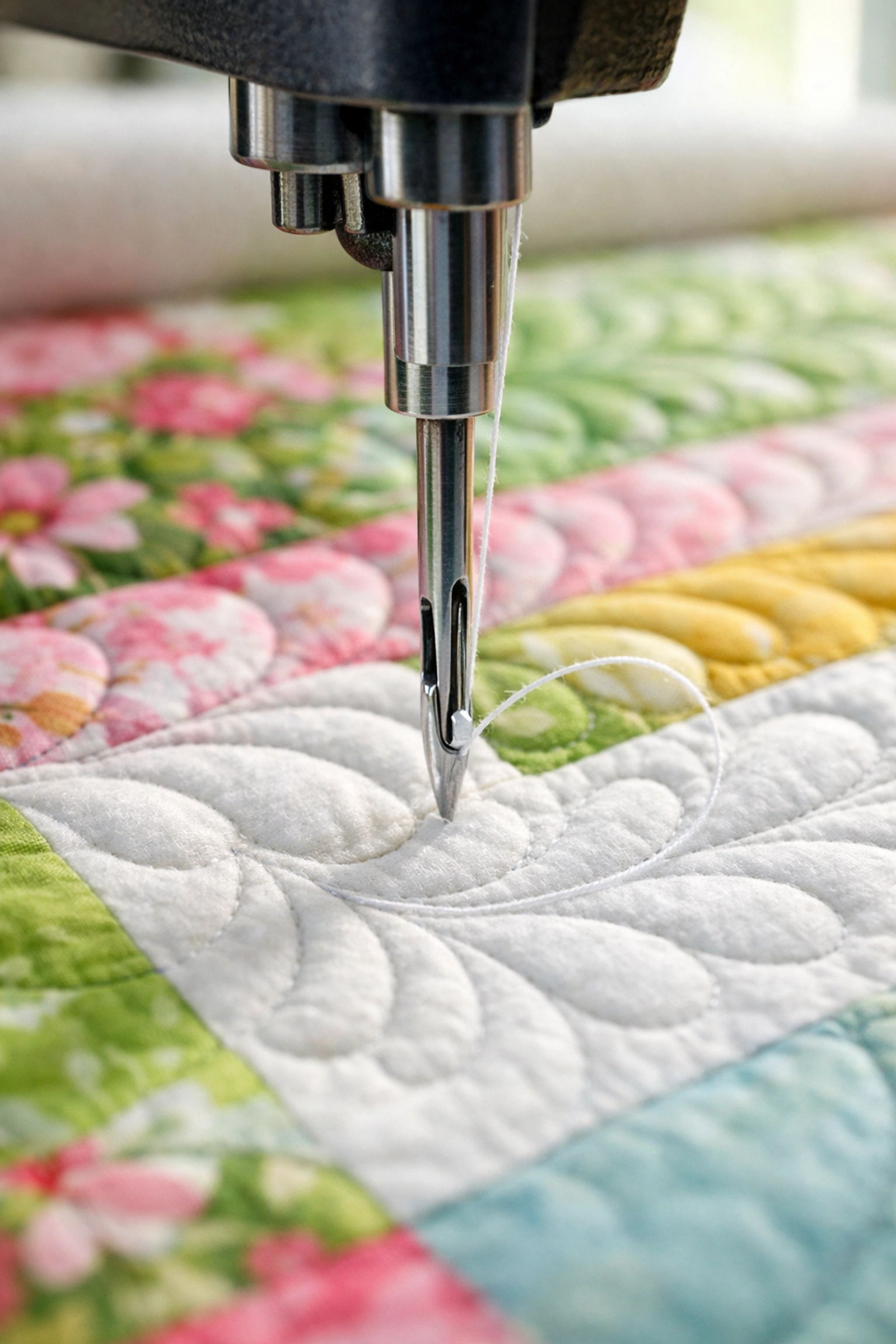
Edge-to-Edge (often called E2E) quilting is the most popular choice for modern quilters. Think of it like a beautiful, textured wallpaper for your quilt. The longarm machine uses a single, repeating design that starts at the top left corner and works its way across and down until it hits the bottom right. It ignores the blocks, the borders, and the piecing entirely, stitching right over them in a consistent pattern.
Why We Love Edge-to-Edge
E2E quilting is incredible because it adds a layer of "unity" to the quilt. If your piecing is a bit busy or if you’ve used a wide variety of scrap fabrics, an E2E design can actually help "quiet" the noise and pull everything together.
It’s also the go-to choice for quilts that are meant to be used. Because the quilting is consistent and usually not overly dense, the quilt remains soft and "snuggly." If you’re making a gift for a new baby or a graduation quilt for a college dorm, E2E is almost always the winner.
The Pros:
-
Affordability: In the quilting world, time is money. Since E2E is automated and repetitive, it costs significantly less: usually ranging from $0.015 to $0.02 per square inch.
-
Speed: We can get these through the machine much faster. If you’re on a deadline for a birthday or holiday, E2E is your best friend.
-
Durability: These designs are great for quilts that will be tossed in the wash frequently.
The Masterpiece Treatment: Custom Quilting
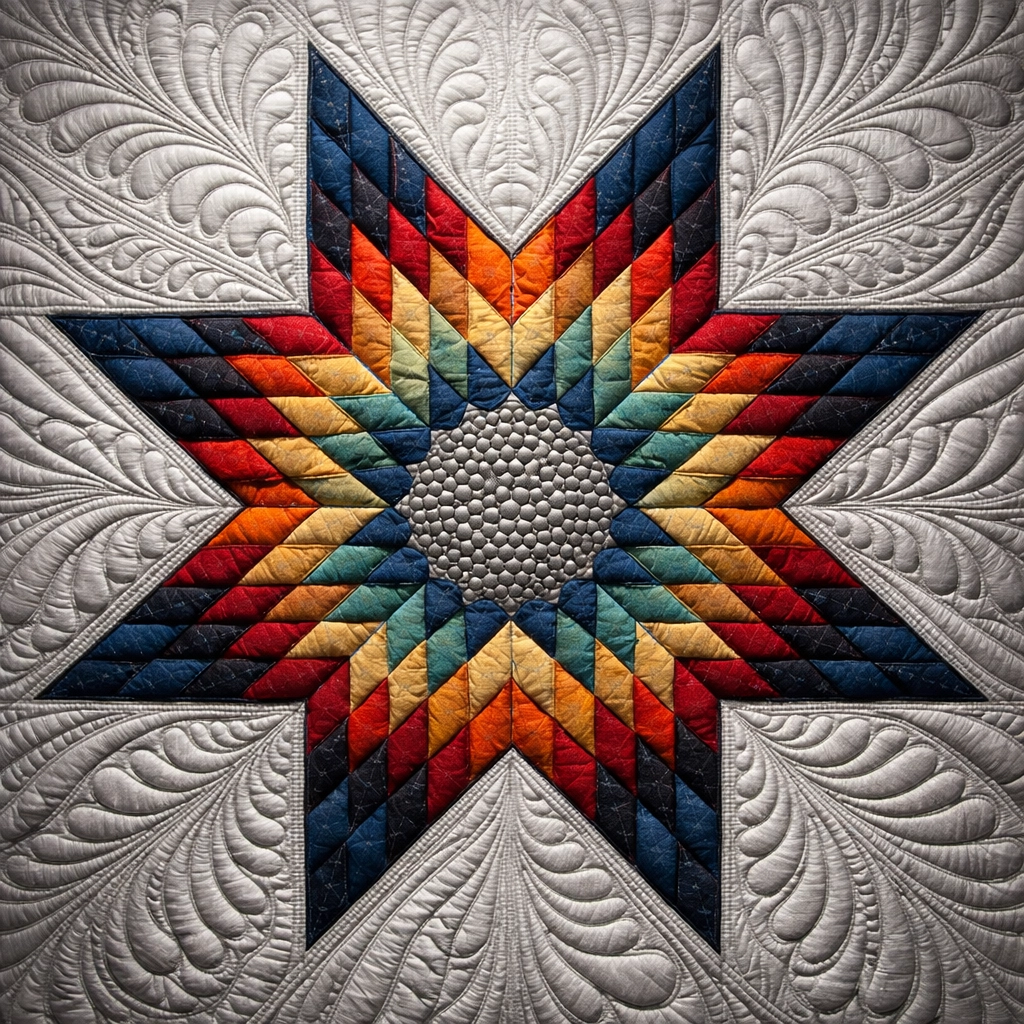
Custom quilting is where the longarmer becomes an artist. Instead of one repeating pattern, the quilter treats every part of your quilt differently. They might put a feathered design inside your stars, a geometric "stitch-in-the-ditch" around your blocks, and a completely different scrolling vine in your borders.
When to Choose Custom
Custom quilting is for those "labor of love" projects. If you’ve spent a year hand-piecing an intricate design or if you’re planning to enter a quilt into a show at the Missouri State Fair, custom quilting is how you make it a showstopper. It highlights the architecture of your quilt. It can turn a simple pattern into something that looks like it belongs in a museum.
The Pros:
-
Highlighting Detail: It draws the eye to the specific piecing you worked so hard on.
-
Unique Artistry: No two custom-quilted pieces are ever exactly the same.
-
Structural Integrity: It can help stabilize very complex tops that might have a lot of "heavy" seams.
The Trade-off:
Custom quilting is a major investment. Because the quilter has to stop, start, change thread colors, and manually guide the machine (or program specific zones), it takes three to five times longer than E2E. You can expect to pay $0.03 per square inch or much more, depending on the complexity.
Breaking Down the Costs: A Real-World Example
Let's talk numbers. We know that quilting is an investment, and at Countryside Quilts™ (a proud brand under the Countryside General Stores LLC umbrella), we want to be transparent.
Imagine you have a standard "Throw" size quilt that is 60" x 70". That’s 4,200 square inches.
-
Edge-to-Edge: At roughly $0.015 per square inch, your quilting would cost about $63.
-
Custom: At a starting rate of $0.03 per square inch, that same quilt starts at $126 and can easily go up to $250+ if you want high-density "heirloom" stitching.
Before you drop your quilt off at a local Missouri shop, ask yourself: Is this a "couch quilt" or a "wall quilt"? If it’s for snuggling during a movie, save that extra $100 and spend it on your next fabric haul!
Intended Use: Does it Pass the "Cuddle Test"?
One thing many quilters don't realize until they feel the finished product is how quilting density affects the "drape" of the fabric.
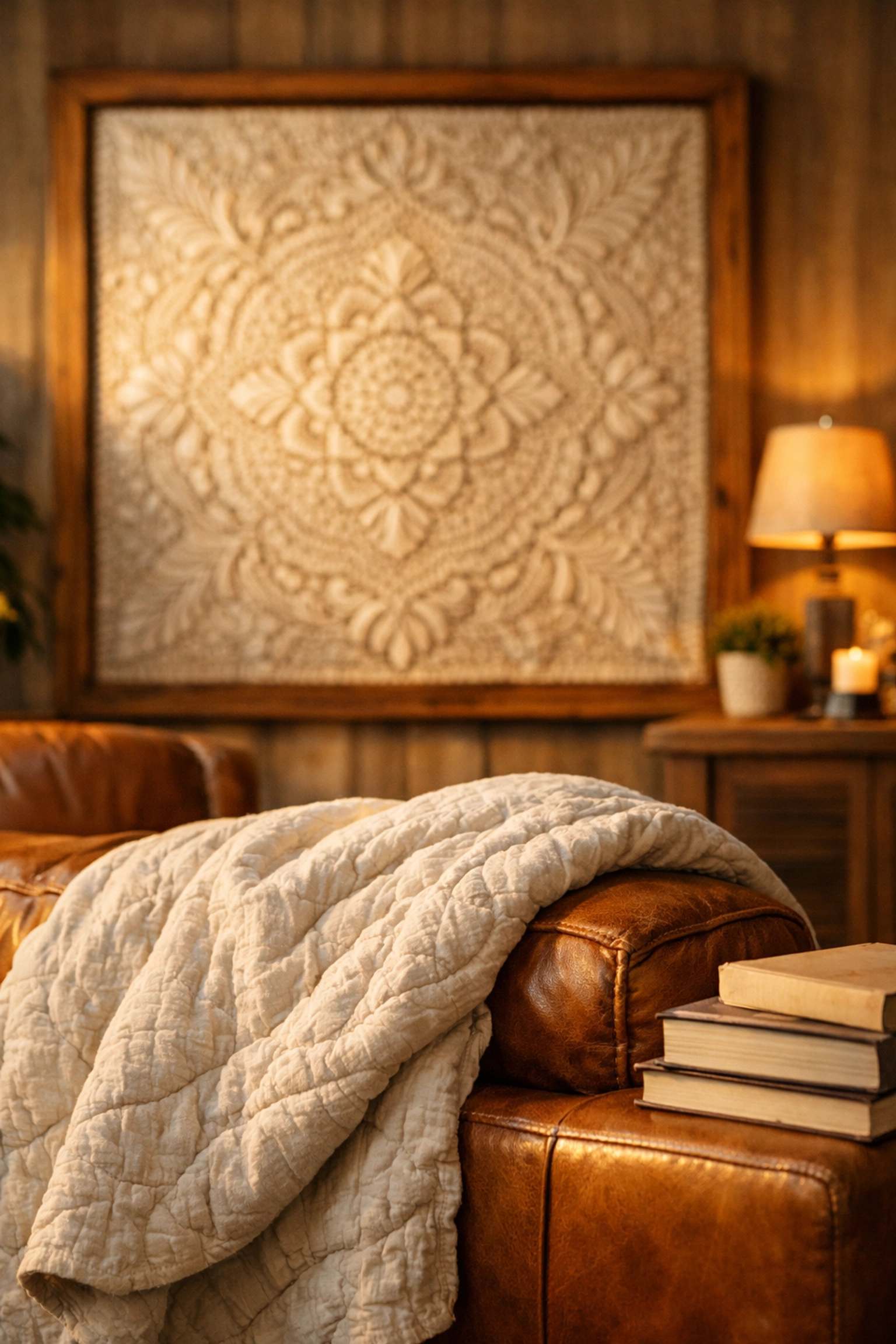
Custom quilting tends to be much denser than E2E. More thread means a stiffer quilt. While it will soften up after a few washes, a heavily custom-quilted piece will never be as floppy and soft as a light E2E design.
If you’re making a Landscape Art Quilt meant to hang on a wall, stiffness is actually a good thing! It helps the quilt hold its shape. But if it’s a bed quilt, you might prefer the airiness of a repeating pantograph.
Preparing Your Quilt for the Longarmer
Regardless of which service you choose, your longarmer in Jefferson City or Marshfield will love you forever if you prep your quilt correctly.
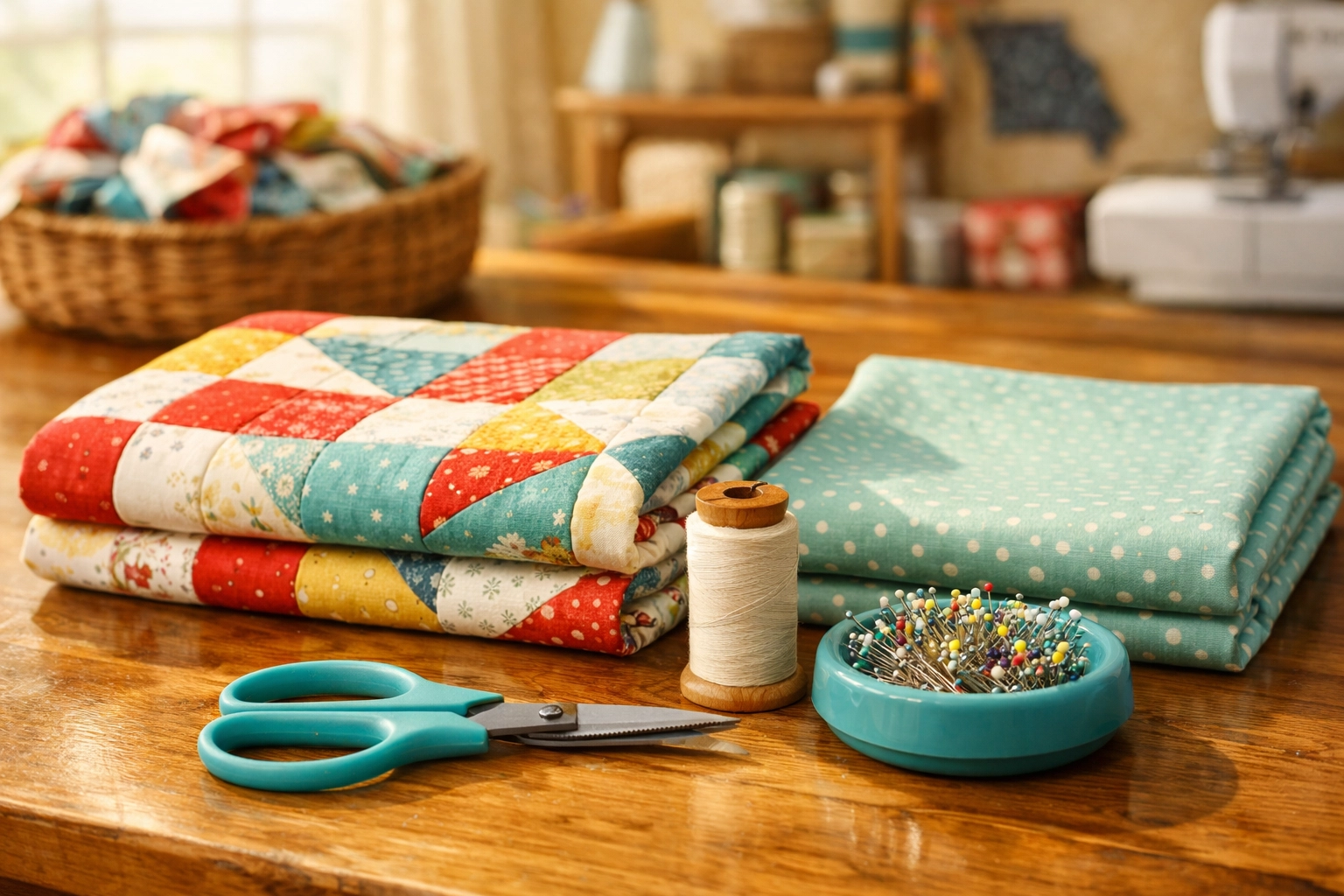
First, make sure your back is at least 4-8 inches wider than your top on all sides. This gives us room to clamp the fabric onto the longarm frame. Second, clip those loose threads! If you have dark threads sitting behind white fabric, they will show through once the quilt is quilted. We recommend using a pair of Perfect Scissors to get those tiny stray hairs.
Also, check your tension while piecing. If your top is "wavy" because the borders weren't measured correctly, custom quilting won't necessarily hide that: in fact, it might highlight it. If you're struggling with your machine at home, check out our guide on how to fix tension instantly.
The Missouri Connection: Why Local Matters
There’s something special about the quilting community here in Missouri. Whether you're coming to see us from the rolling hills of Marshfield or the bustling streets of Jeff City, we know that every quilt tells a story.
When you choose a local longarm service like Countryside Quilts™, you’re not just getting a service; you’re joining a family. We often discuss these very topics on the Countryside Experience Podcast, where we dive deep into the rural lifestyle, the joy of crafting, and the business of keeping these traditions alive.
The Quick Decision Guide
Still on the fence? Use this "Cheat Sheet" to decide:
Go with Edge-to-Edge if:
- You want the quilt finished in under a month.
- You’re on a budget.
- The quilt is for a child or a pet.
- You love a soft, crinkly, washed-quilt texture.
- The piecing is very "busy" (like an Addicted to Scraps project).
Go with Custom if:
- You are entering a competition.
- The quilt is a once-in-a-lifetime heirloom (like a wedding quilt).
- There is a lot of "negative space" (solid fabric) that needs visual interest.
- Budget is not a primary concern.
- You want to emphasize specific shapes in your piecing.
Final Thoughts
At the end of the day, there is no wrong way to finish a quilt. Whether you choose a simple daisy E2E pattern or a complex custom feathering, the fact that you completed a project is what matters most.
If you’re ready to get that project off your "To-Do" list and onto a bed, come see us! We’ve got the shorter perfect pins for your prep and the expertise to help you pick the perfect design.
Remember, Countryside Quilts™ is more than just a retail store; we are a part of your creative journey. Sponsored by Countryside General Stores LLC, we strive to bring you the best tips and tricks through our podcast and our shop. Happy quilting, Missouri!


Leave a comment